Modular hexagonal steel units
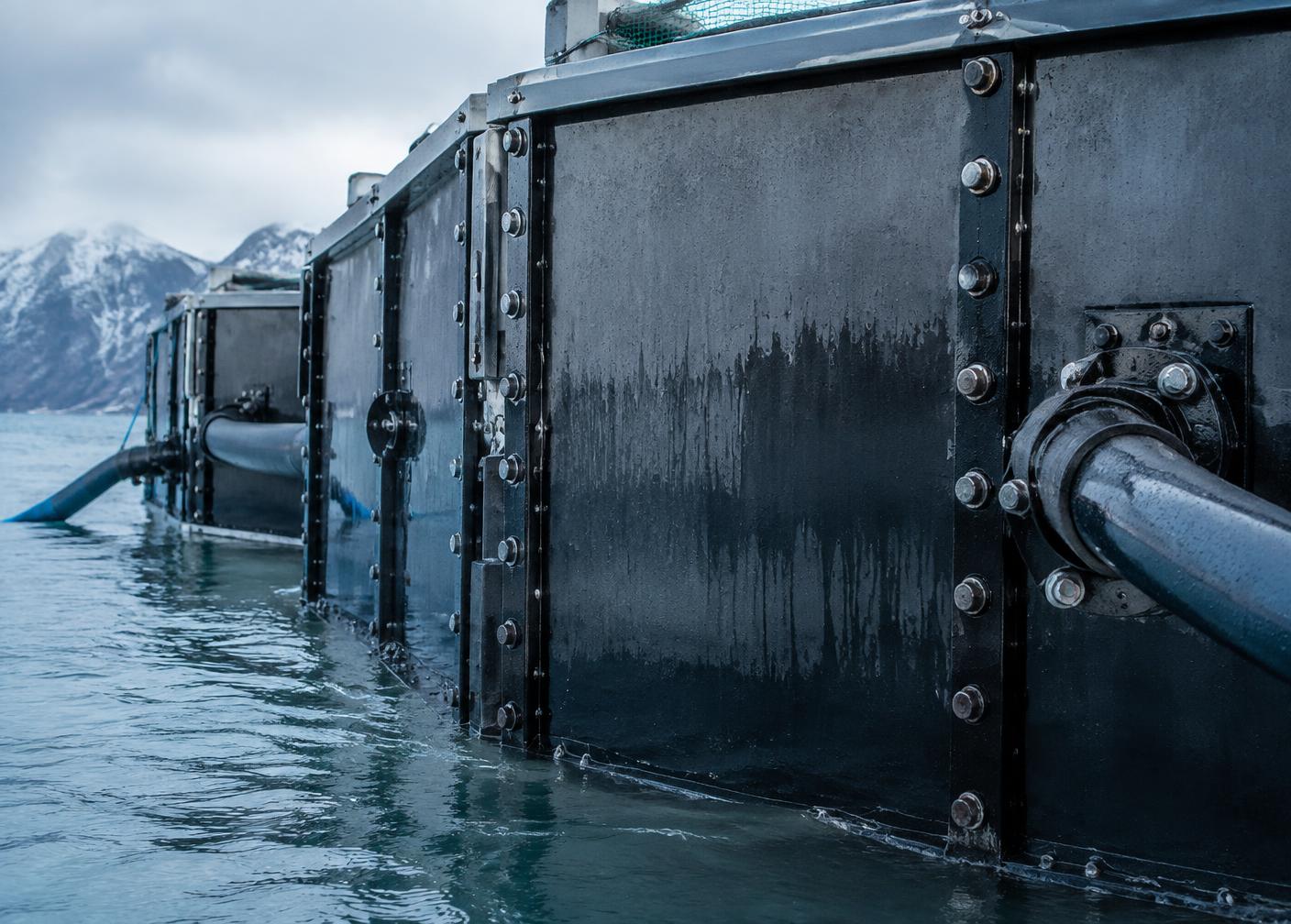
Each Hexacage unit is a self-contained hexagonal steel tank that couples to its neighbours. Capacity is added unit by unit, so a site scales with demand and financing instead of one monolithic build.
Technology & biology
Swedish Fish Farm builds on Hexacage closed containment technology, engineered in Norway for exposed northern waters and adapted here for brackish Baltic conditions.
Technology partner: hexacage.no
System pillars
Each Hexacage unit is a self-contained hexagonal steel tank that couples to its neighbours. Capacity is added unit by unit, so a site scales with demand and financing instead of one monolithic build.
Water is drawn from well below the lice zone, filtered on intake and delivered at stable temperature and salinity. Pathogen and parasite pressure drops to near zero without a single chemical treatment.
Inflow geometry creates a uniform, gently rotating current the fish swim into. Controlled velocity builds muscle and cardiac condition while keeping oxygen even across the full volume.
Units are drained, inspected and washed on site between cycles. Sludge and faeces are collected rather than released, giving a clean biosecurity break and a nutrient stream for reuse.
A solid steel wall means no escapes and no genetic interaction with wild Baltic stocks — the single issue that most constrains new licences in the region.
Because the sea supplies volume, temperature and buoyancy, energy use lands around 1 kWh per kilo produced, a fraction of a comparable land-based recirculation plant.
Siting advantage
Open-net pens must be pushed out into exposed, deep, strongly flushed water, because the sea itself has to carry away their waste and dilute their disease pressure. A closed unit carries its own water supply and captures its own waste, so it no longer needs an exposed site. It can be placed in sheltered water close to land.
An open net depends on strong currents to flush its waste and dilute disease pressure, which forces operators into exposed, high-energy locations. A closed unit pumps and filters its own water and collects its own solids, so it can be moored in calm, sheltered water close to land without any environmental penalty.
Intake water is drawn from chosen depths and blended, holding the fish in their optimal temperature and oxygen window for far more of the year. Open pens lose weeks of growth to surface heat, cold shocks, algae, jellyfish and low-oxygen events. Removing those stalls is what shortens the cycle to harvest weight.
Fish that are never deloused, never chilled, never crowded and never hypoxic keep eating and keep converting. Uneaten pellets do not fall through a net into the sea — flow control keeps feed in front of the fish, and captured solids show exactly what was wasted. The result is a lower feed conversion ratio, which is the single largest cost item in salmonid farming.
Nearshore siting means short boat runs for feed, smolt, service crews and harvest, reliable grid power instead of diesel generators, everyday access for staff and veterinarians, and a short chilled route from harvest to processing. Fewer hours at sea means less fuel, less risk and better fish quality at the gate.
When a site is fifteen minutes from the quay rather than hours offshore, a sensor alarm gets a person on the unit the same hour, and weather no longer dictates whether the fish can be fed or inspected. Small corrections made early are what keep cycle mortality under one percent.
Production can sit near coastal communities that already have harbours, processing and skilled labour — creating local jobs and shortening the chain to Nordic and Baltic consumers, without adding nutrients to the water those communities live beside.
Side by side
The same fish, the same species, the same market — two very different production curves. Figures describe the design case for our units against typical Nordic open-net operation.
Offshore, open net
Exposed, deep, strongly flushed water — the sea must dilute the waste and the disease pressure.
Nearshore, closed unit
Sheltered coastal water. Waste is captured and water is supplied by the unit, so currents are not a siting constraint.
Licensing practice: Swedish and Finnish siting criteria for open pens are built around dispersion and recipient capacity.
Offshore, open net
Whatever the surface layer does: summer heat above the optimum, winter cold below it.
Nearshore, closed unit
Intake drawn and blended from selected depths, holding the fish near their optimal growth temperature far longer each year.
Method: intake depth mixing modelled against Baltic and Bothnian seasonal temperature profiles for the target sites.
Offshore, open net
Depends on current and weather; stratification and algae events cause hypoxic episodes.
Nearshore, closed unit
Controlled inflow and flow geometry keep oxygen even across the whole volume, with oxygenation on demand.
Basis: Hexacage flow-control design specification; appetite response to saturation from published salmonid physiology.
Offshore, open net
Interrupted: appetite collapses during heat, cold shocks, algae, jellyfish and every delousing operation.
Nearshore, closed unit
Continuous. Removing those stalls is what shortens the time to harvest weight on the same genetics.
Method: modelled as the same growth table with lost feeding days removed — not a claim of faster growth at equal conditions.
Offshore, open net
Pellets fall through the mesh and are lost; stressed and handled fish convert poorly.
Nearshore, closed unit
Feed is held in front of the fish, waste solids are measured, and unstressed fish convert efficiently — a materially lower feed conversion ratio.
Method: gain measured against feed delivered, with uneaten pellets recovered in the solids stream; open-net feed loss taken from published industry ranges.
Offshore, open net
Recurring infestation; mechanical, thermal or chemical delousing several times per cycle.
Nearshore, closed unit
Intake from below the lice layer, filtered. Zero delousing operations, so zero handling losses.
Basis: lice larvae concentrate in the upper water column; intake is taken below that layer and filtered.
Offshore, open net
Typically 10-15% per cycle, much of it treatment- and event-driven.
Nearshore, closed unit
Target under 1% per cycle, with each unit isolated as its own biosecurity zone.
Open-net range from Norwegian and Scottish industry mortality reporting. The under-1% figure is our design target, to be confirmed by the pilot.
Offshore, open net
Long offshore runs by boat and wellboat; weather windows dictate feeding, inspection and harvest.
Nearshore, closed unit
Minutes from the quay. Daily access in most weather, grid power instead of generators, short chilled route to processing.
Method: vessel hours, fuel and weather-downtime modelled for candidate nearshore sites against typical offshore run distances.
Offshore, open net
Offshore crews, standby vessels, high fuel burn, limited veterinary access.
Nearshore, closed unit
Shore-based teams, same-hour response to alarms, routine veterinary attendance, lower fuel and vessel cost per kilo.
Method: shore-based staffing plan for the pilot site; costs per kilo modelled, not yet observed.
Offshore, open net
Long transport, handling stress and variable condition at slaughter.
Nearshore, closed unit
Short, gentle route from unit to processing — better flesh quality and higher yield per kilo harvested.
Basis: established relationship between pre-slaughter stress and flesh quality in salmonids; yield to be verified at pilot harvest.
| Factor | Exposed offshore, open net | Nearshore, closed steel unit |
|---|---|---|
Site requirement | Exposed, deep, strongly flushed water — the sea must dilute the waste and the disease pressure. | Sheltered coastal water. Waste is captured and water is supplied by the unit, so currents are not a siting constraint.Licensing practice: Swedish and Finnish siting criteria for open pens are built around dispersion and recipient capacity. |
Water temperature | Whatever the surface layer does: summer heat above the optimum, winter cold below it. | Intake drawn and blended from selected depths, holding the fish near their optimal growth temperature far longer each year.Method: intake depth mixing modelled against Baltic and Bothnian seasonal temperature profiles for the target sites. |
Oxygen | Depends on current and weather; stratification and algae events cause hypoxic episodes. | Controlled inflow and flow geometry keep oxygen even across the whole volume, with oxygenation on demand.Basis: Hexacage flow-control design specification; appetite response to saturation from published salmonid physiology. |
Growth rate | Interrupted: appetite collapses during heat, cold shocks, algae, jellyfish and every delousing operation. | Continuous. Removing those stalls is what shortens the time to harvest weight on the same genetics.Method: modelled as the same growth table with lost feeding days removed — not a claim of faster growth at equal conditions. |
Feed conversion | Pellets fall through the mesh and are lost; stressed and handled fish convert poorly. | Feed is held in front of the fish, waste solids are measured, and unstressed fish convert efficiently — a materially lower feed conversion ratio.Method: gain measured against feed delivered, with uneaten pellets recovered in the solids stream; open-net feed loss taken from published industry ranges. |
Sea lice and treatments | Recurring infestation; mechanical, thermal or chemical delousing several times per cycle. | Intake from below the lice layer, filtered. Zero delousing operations, so zero handling losses.Basis: lice larvae concentrate in the upper water column; intake is taken below that layer and filtered. |
Mortality | Typically 10-15% per cycle, much of it treatment- and event-driven. | Target under 1% per cycle, with each unit isolated as its own biosecurity zone.Open-net range from Norwegian and Scottish industry mortality reporting. The under-1% figure is our design target, to be confirmed by the pilot. |
Logistics | Long offshore runs by boat and wellboat; weather windows dictate feeding, inspection and harvest. | Minutes from the quay. Daily access in most weather, grid power instead of generators, short chilled route to processing.Method: vessel hours, fuel and weather-downtime modelled for candidate nearshore sites against typical offshore run distances. |
Labour and service | Offshore crews, standby vessels, high fuel burn, limited veterinary access. | Shore-based teams, same-hour response to alarms, routine veterinary attendance, lower fuel and vessel cost per kilo.Method: shore-based staffing plan for the pilot site; costs per kilo modelled, not yet observed. |
Harvest quality | Long transport, handling stress and variable condition at slaughter. | Short, gentle route from unit to processing — better flesh quality and higher yield per kilo harvested.Basis: established relationship between pre-slaughter stress and flesh quality in salmonids; yield to be verified at pilot harvest. |
The mechanism
Growth in salmonids is not a mystery: it is temperature, oxygen, water quality, stress and feed delivery. A closed unit near shore is the only configuration that lets an operator set all five instead of accepting them.
01
Salmonids grow fastest in a narrow temperature band. In an open pen the fish live in the surface layer and take whatever it delivers. A closed unit draws water from chosen depths and blends intakes, so the tank can be held inside the growth optimum through summer heat and through winter cold.
Effect: More days per year spent growing at maximum rate, which is what compresses the cycle to harvest weight.
02
Inflow geometry creates a uniform, gently rotating current, so there are no dead zones and no low-oxygen pockets. Oxygen can be added on demand rather than hoped for from the current. Appetite in salmonids falls sharply as saturation drops.
Effect: Fish keep eating at full ration, and feed already delivered is actually converted into flesh.
03
Filtered intake from below the lice layer means no delousing — no crowding, no pumping, no thermal or mechanical treatment. Each of those operations costs a week or more of lost appetite and causes a measurable share of cycle mortality.
Effect: No growth stalls and no treatment losses, supporting the under-1% cycle mortality target.
04
In an open net, a share of every feeding falls through the mesh to the seabed. Inside a closed unit the current keeps pellets circulating in front of the fish, and uneaten feed is collected with the solids — so waste is measured, not guessed, and feeding can be tuned per unit in real time.
Effect: Directly lower feed conversion ratio — the single largest cost line in salmonid farming.
05
A steady, moderate current gives the fish something to swim into, building muscle and cardiac condition. Unlike an exposed offshore site, the velocity is chosen for the biology rather than imposed by weather.
Effect: Better condition factor and robustness at harvest, with lower energy spent fighting storm surge.
06
A site fifteen minutes from the quay can be fed, inspected and serviced on a normal working day, runs on grid power instead of diesel, and gets a person on the unit the same hour an alarm triggers. Harvest travels a short chilled distance to processing.
Effect: Lower operating cost per kilo, fewer bad days, and higher quality at the factory gate.
Method note
We would rather state the basis than overstate the result. The technical claims on this page fall into three categories, and we keep them separate in every investor and grant document.
Energy use of roughly 1 kWh per kilo, 40-year marine steel design life, closed containment, filtered deep-water intake and flow-control velocities come from the Hexacage technology specification and its engineering documentation.
Open-net reference points — cycle mortality in the 10-15% range, recurring delousing operations, feed loss through mesh, nutrient discharge per tonne — are taken from Nordic industry and authority reporting and from HELCOM and EU assessments of Baltic nutrient load.
Growth curve, feed conversion ratio, logistics hours and cost per kilo are modelled for our candidate nearshore sites using Baltic and Bothnian water-temperature profiles. These are targets to be verified by the pilot, not measured results.
Growth-rate and feed-conversion improvements are attributed to the removal of lost feeding days — heat, cold shocks, low-oxygen events, algae and delousing handling — rather than to any claim of faster growth under identical conditions. Full assumptions, source references and sensitivity ranges are provided in the data room.
Welfare protocol
Stocking density, current velocity, oxygen saturation and feed response are logged continuously per unit. Because each cage is isolated, a deviation is contained and corrected in one unit rather than across a whole site.